Care
How to care for plated jewellery in humid weather
Published 2 June 2026 · 5 min read
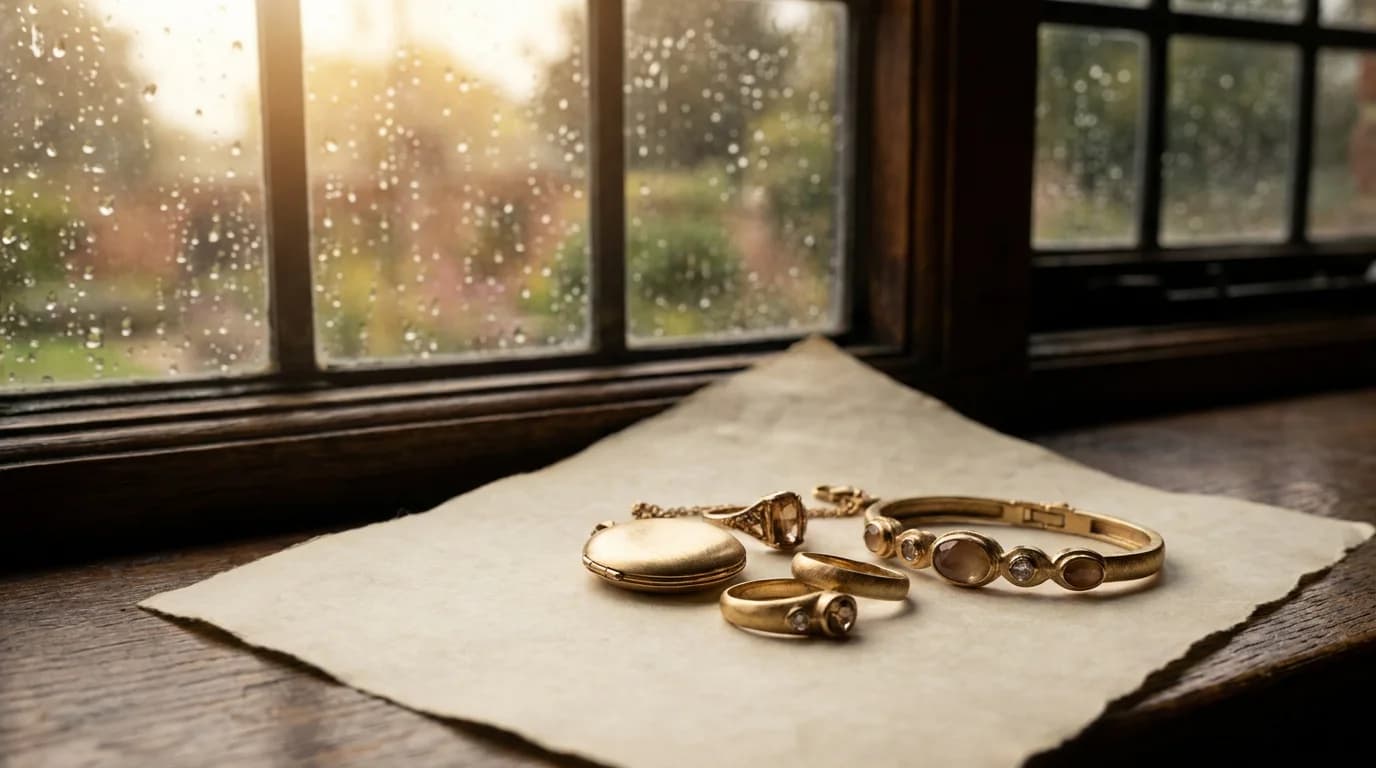
Plated jewellery is a thin layer of one metal bonded over another. Everything in its care follows from that fact: the layer is beautiful, the layer is thin, and chemistry is patient. In humid weather, the chemistry works faster.
None of this makes plated jewellery fragile — it makes it maintainable. Ten seconds of habit per wear buys years of finish.
Why humidity matters
Moist air carries dissolved salts and reacts with skin oils and sweat to form a mildly corrosive film on metal surfaces. On solid metals this dulls; on plating it slowly thins the layer, starting at edges and high-contact points. Monsoon months and coastal cities accelerate this — the jewellery isn't worse, the air is busier.
The three habits that do the work
First: wipe after wear. The cloth in your box isn't packaging — it removes the day's film before it settles in. Ten seconds around the whole piece, with attention to the back, which touches skin longest.
Second: keep pieces dry and separated. The pouch does two jobs — it slows moisture exchange and prevents harder stones from scratching softer plating. Never store jewellery in the bathroom, which is a humidity chamber with mirrors.
Third: sequence your routine. Perfume, hairspray, moisturiser and sunscreen all contain compounds that attack plating. Finish getting ready, then put jewellery on last. Take it off first when you're back.
What to avoid entirely
Water immersion — swimming, dishes, showers. Ultrasonic cleaners and dip solutions built for solid gold; they're too aggressive for plated pieces. And 'polishing' with toothpaste or baking soda, which is sanding with extra steps.
If a piece dulls despite care, a dry microfibre cloth is the safest recovery. For anything more, write to us before experimenting — some finishes, like antique recesses, are meant to stay dark.
Proportions are personal. The virtual try-on answers in two minutes what any rule of thumb only estimates.